

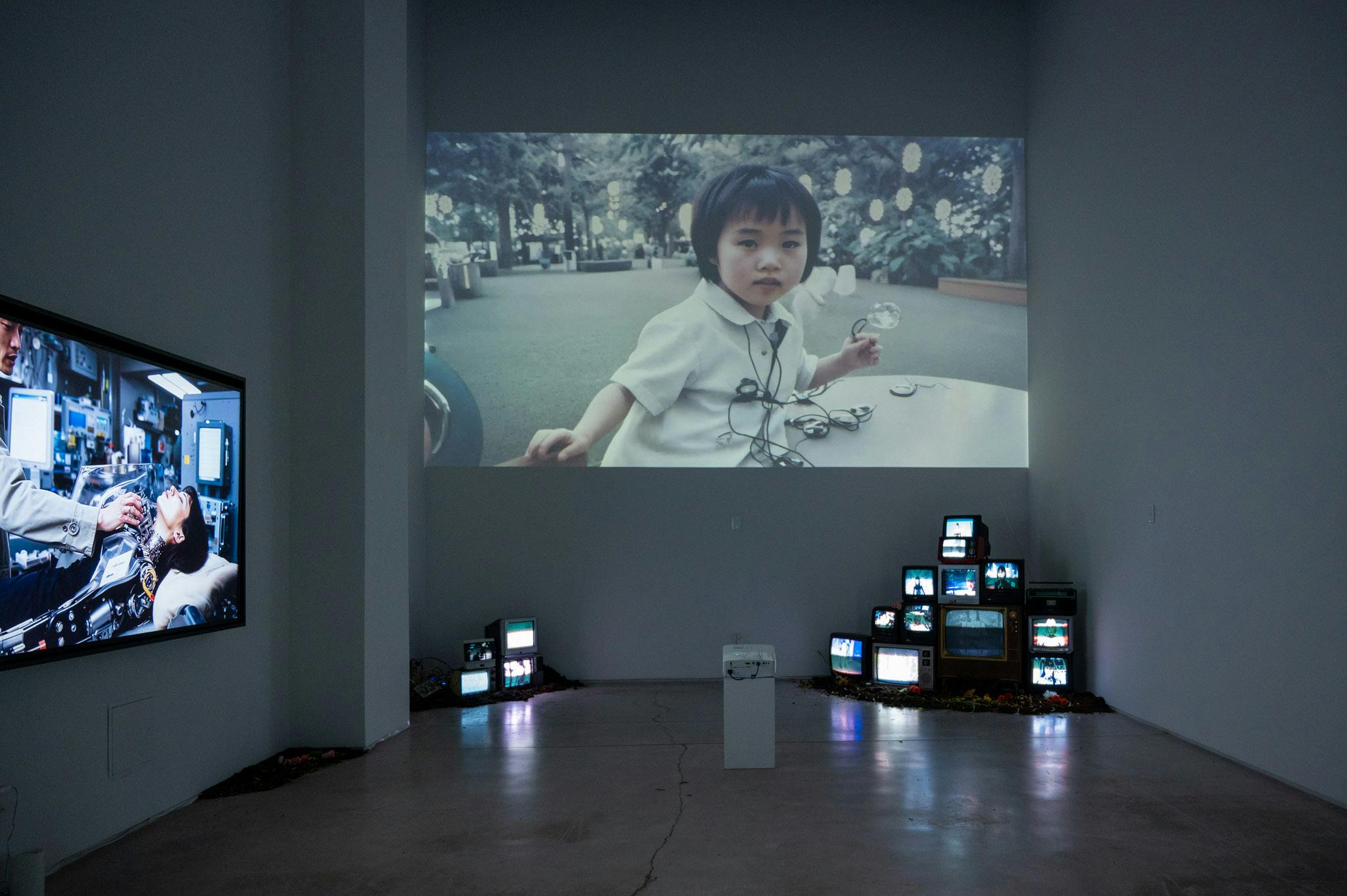


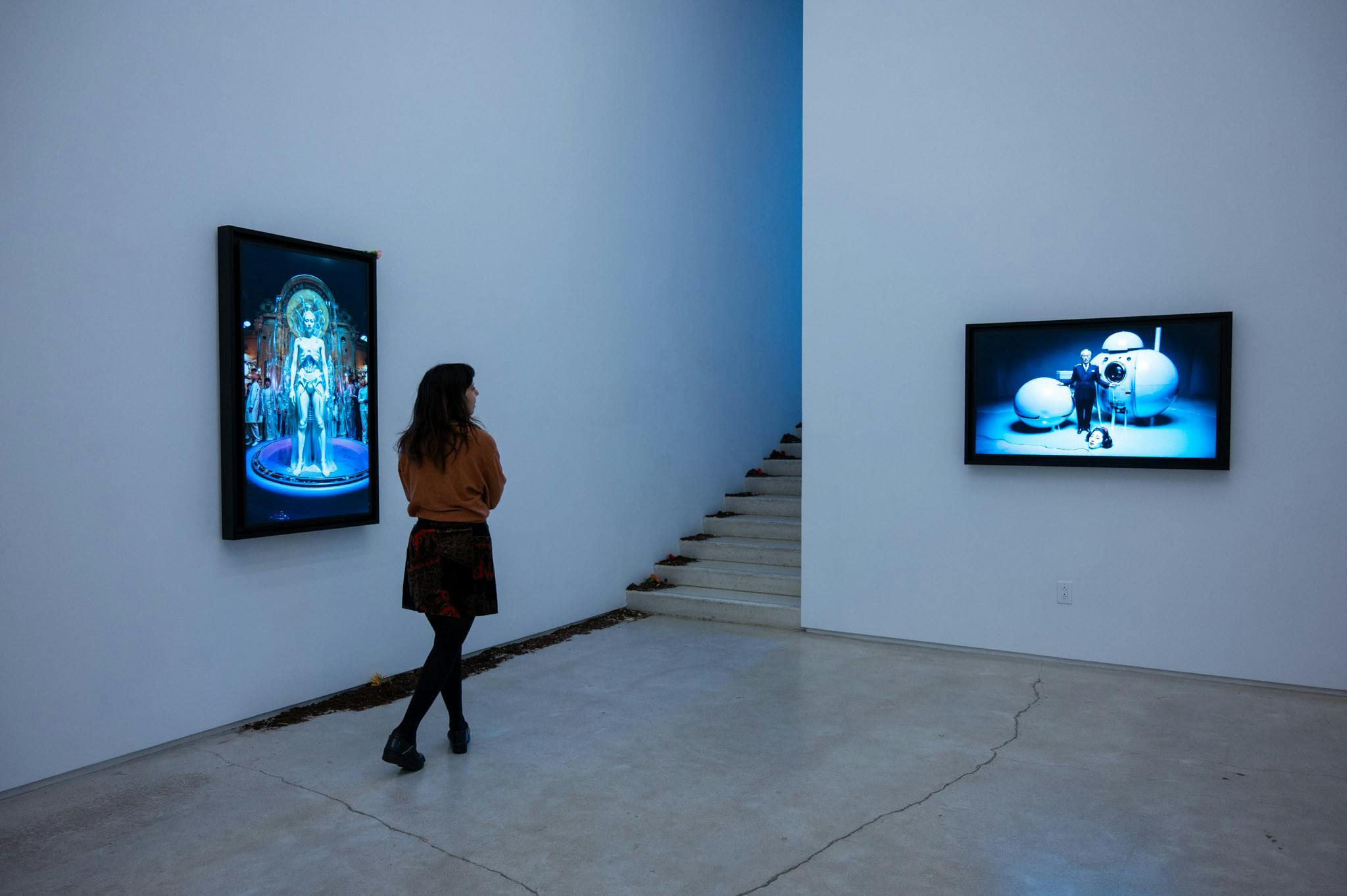

EGO IN THE SHELL is an attempt to overlap the Buddhist philosophy of the self as kū (emptiness) with our modern condition, where AI reproduces and expands human memory. The future depicted in Ghost in the Shell—where boundaries between body and mind, self and other, reality and illusion dissolve—is no longer a work of fiction.
In this exhibition, the artist's own body and facial data are not treated as a confessional subject, but as an impersonal material, like paint on a canvas. They serve as a universal vessel or sample, reflecting the nature of the self in our time.


The inquiry here is not to lament the absence of a "ghost" (ego). Instead, it adopts the Buddhist perspective of engi (dependent origination), where the self does not exist in isolation but is a transient, "empty" phenomenon, conditionally arising through its relationships with others. From this standpoint, the exhibition interrogates how algorithmic reproduction makes this "empty vessel" of the self visible and rewrites our very sense of lived experience.


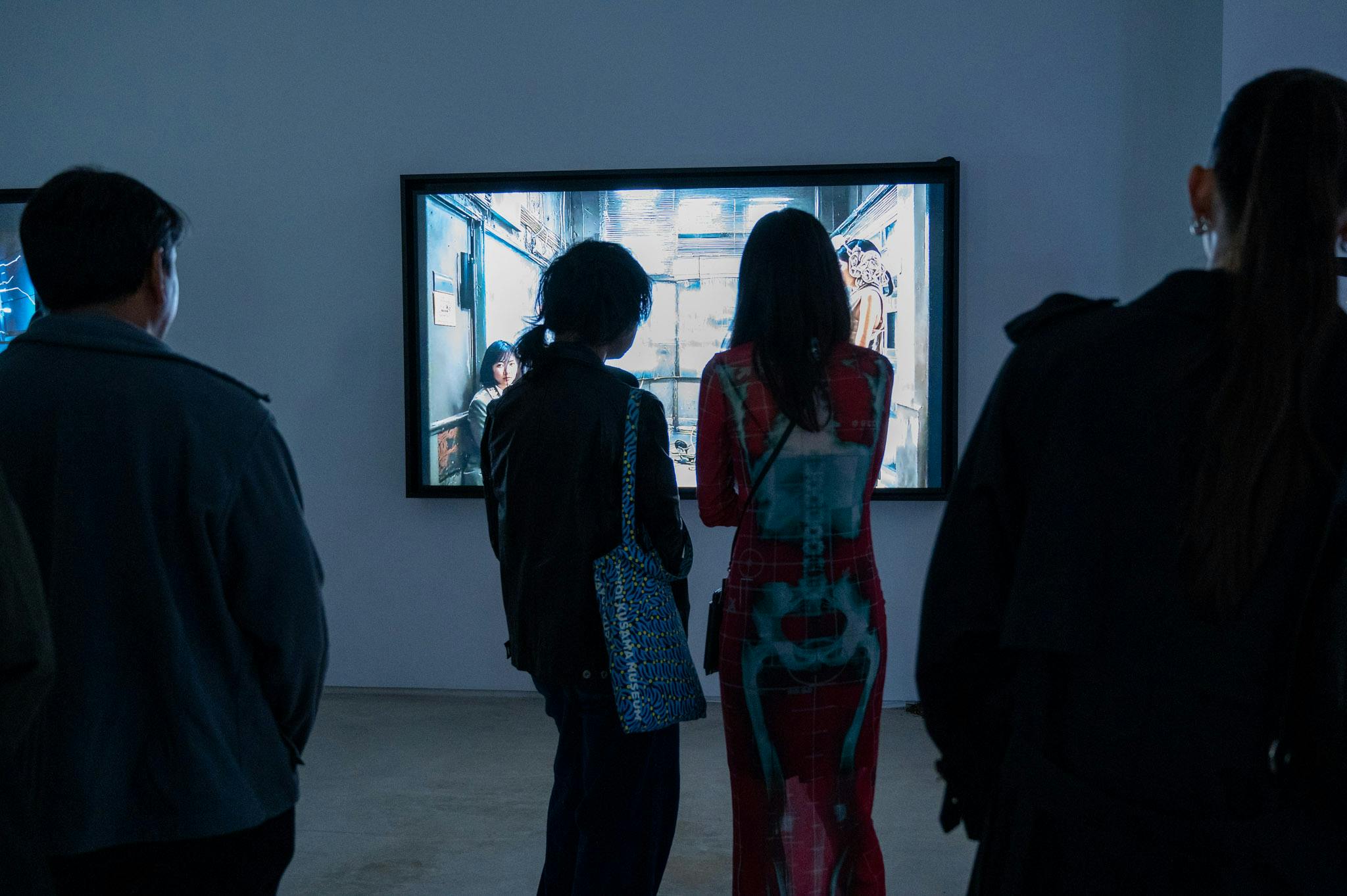
The exhibition is structured to deliberately guide the viewer's consciousness. Beginning with anonymous crowds, it delves into the singular self, then into the memories of a personal history, and culminates in a confrontation with a self that is not a self. It is an experience designed to transform a reflection on a universal social issue into an intimate inquiry into the viewer's own personal memory.


None of the people depicted here exist. They are fictional portraits generated by an AI, referencing the world of the 1995 film Ghost in the Shell and interwoven with fragments of the artist's own facial data, treated as an impersonal material like paint. Inhabiting their cybernetic bodies, these figures exude a sense of drama, sorrow, and intimacy in their quiet, everyday moments.


©️1995 Shirow Masamune/KODANSHA・BANDAI VISUAL・MANGA ENTERTAINMENT. All Rights Reserved.
